
visualize the word: silhouette
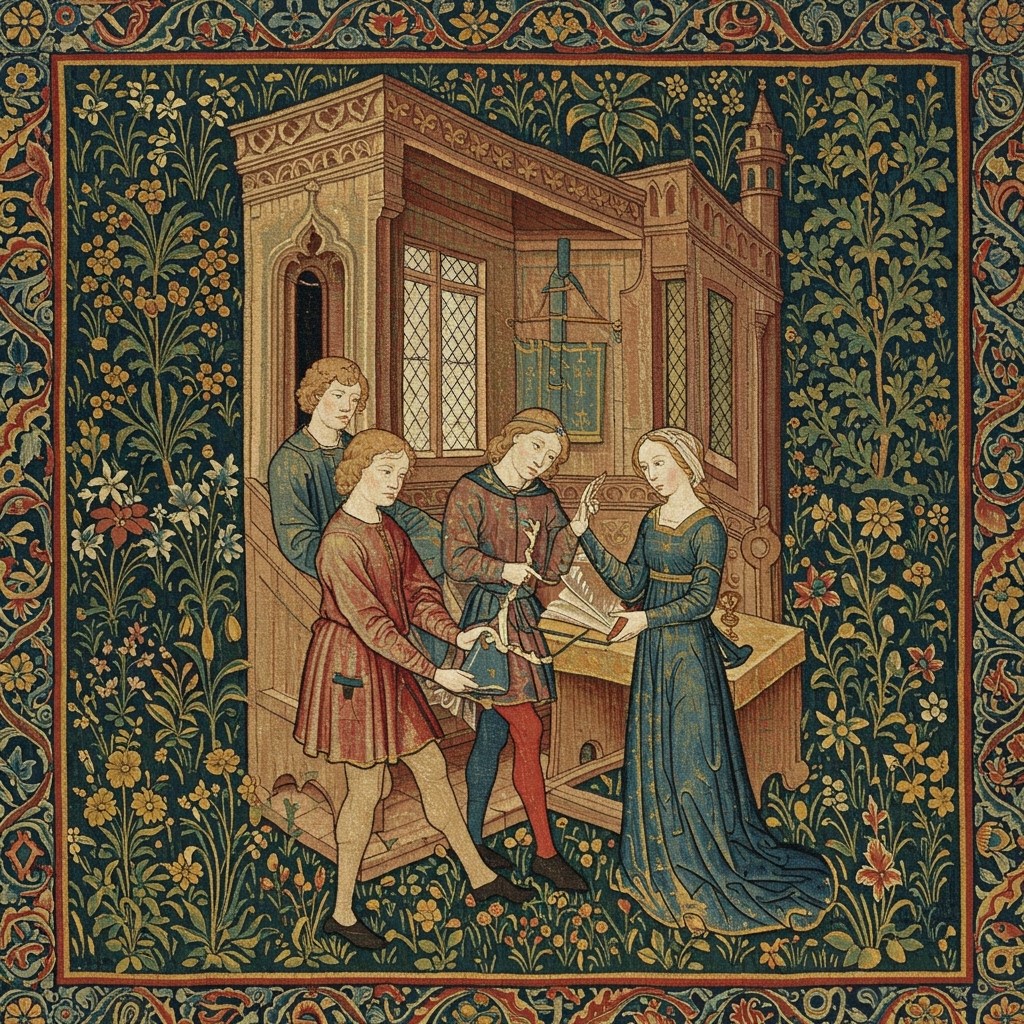
Word: SILHOUETTE
--- WORD ANALYSIS ---
Etymology & Origin:
The term 'silhouette' originated in 18th-century France, named after Étienne de Silhouette, the French Minister of Finance under King Louis XV in 1759. He was notorious for his extremely strict and unpopular austerity measures. During his brief, six-month tenure, anything done cheaply or plainly was mockingly referred to as 'à la Silhouette.' As simple, inexpensive profile portraits—made by tracing the outline of a person's shadow or profile onto paper and filling it in with black—became a popular, affordable alternative to costly painted portraits, they acquired the name 'silhouettes' due to their economical nature.
Components:
The word 'silhouette' is an eponym, meaning it is derived from a person's name rather than being formed from traditional prefixes, roots, or suffixes. It directly refers to Étienne de Silhouette.
Word Family:
outline, profile, shadow, contour, form, figure, shape
--- THE SCHOLAR AND HIS WANDERING SHADOW ---
Once upon a time, in a sun-drenched land far to the south, lived a brilliant scholar who had journeyed from the cool, misty North. He resided in a charming house, its windows always open to let in the warm breeze, yet strangely, the sun always seemed to hit the opposite wall. One sweltering afternoon, as he relaxed on his balcony, the scholar noticed something peculiar: his shadow, usually a loyal companion, seemed to stretch out incredibly long and thin, like a dark, dancing ribbon. "It’s growing restless," he mused, watching it undulate on the wall. "Perhaps it needs to explore the world beyond this room!" He playfully suggested that his shadow might go out and see the world, if it pleased. To his utter astonishment, the shadow flickered, detached itself from the wall, and slipped away through the open door, disappearing into the bright, bustling streets.Years passed. The scholar, now weary and impoverished from his tireless studies, often wondered about his adventurous shadow. Then, one day, a magnificent carriage pulled by six horses stopped before his humble dwelling. From it emerged a figure draped in silks and jewels, radiating an aura of immense wealth and power. It was his shadow, returned! No longer a mere outline, but a formidable personage who had seen the world and amassed a fortune. The shadow, now an influential dignitary, graciously offered the scholar a position: to become his personal shadow once more. The scholar, bewildered but desperate, hesitated. The shadow, grand and commanding, insisted, subtly threatening to cast him into literal darkness should he refuse. In the end, the scholar, frail and powerless against the shadow's imposing presence, acquiesced. And so, the once-brilliant mind became nothing more than a faint echo, a mere silhouette trailing behind the magnificent, worldly shadow, who went on to marry a princess and live a life of unparalleled splendor, forever casting its own grand, unchallenged form upon the world.